From Blueprint to Reality with Excellence
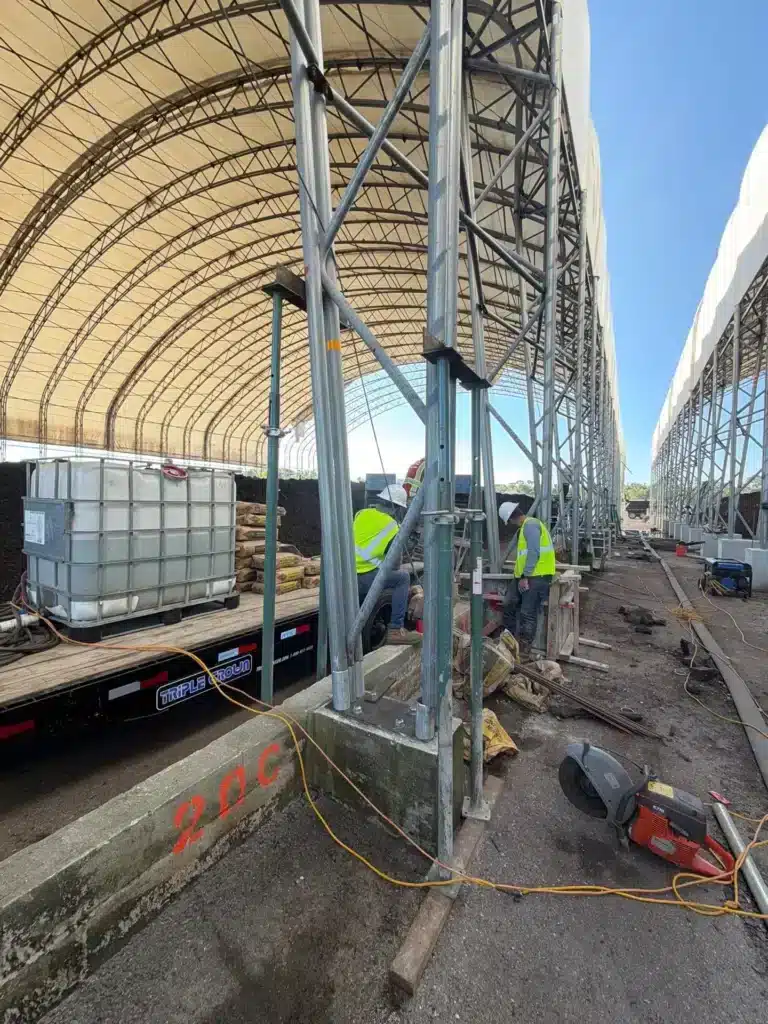
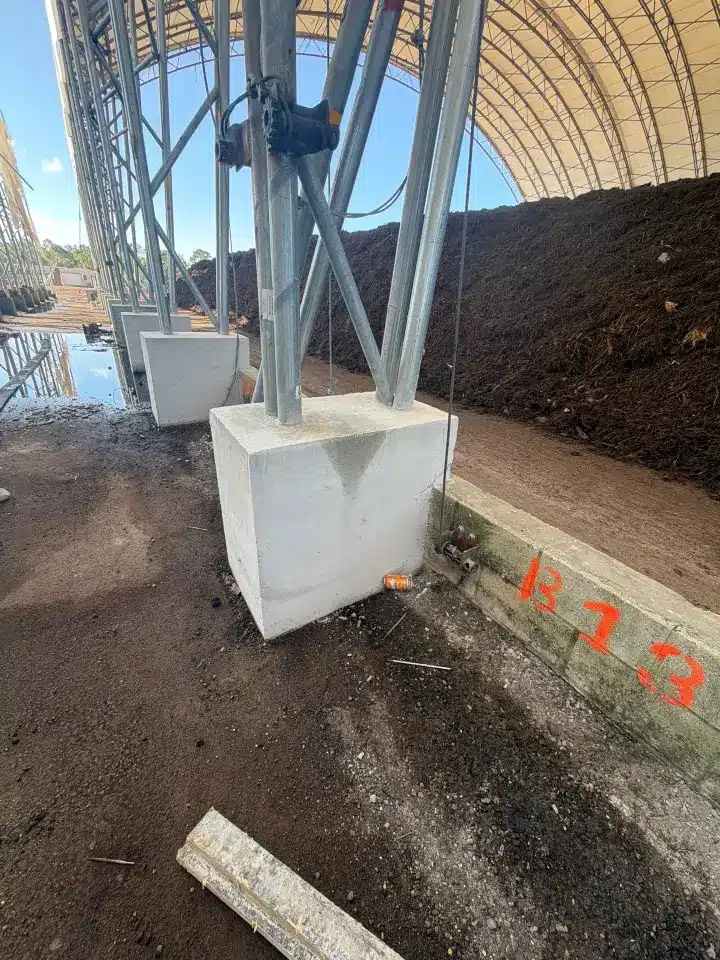
Synagro operates a large-scale industrial hangar in South Florida, originally built by Big Tops, a national manufacturer of tension fabric structures. These buildings are found across the country: hangars, warehouses, fleet storage, industrial shelters. This particular structure stands over 50 feet tall. Trucks drive through it daily.
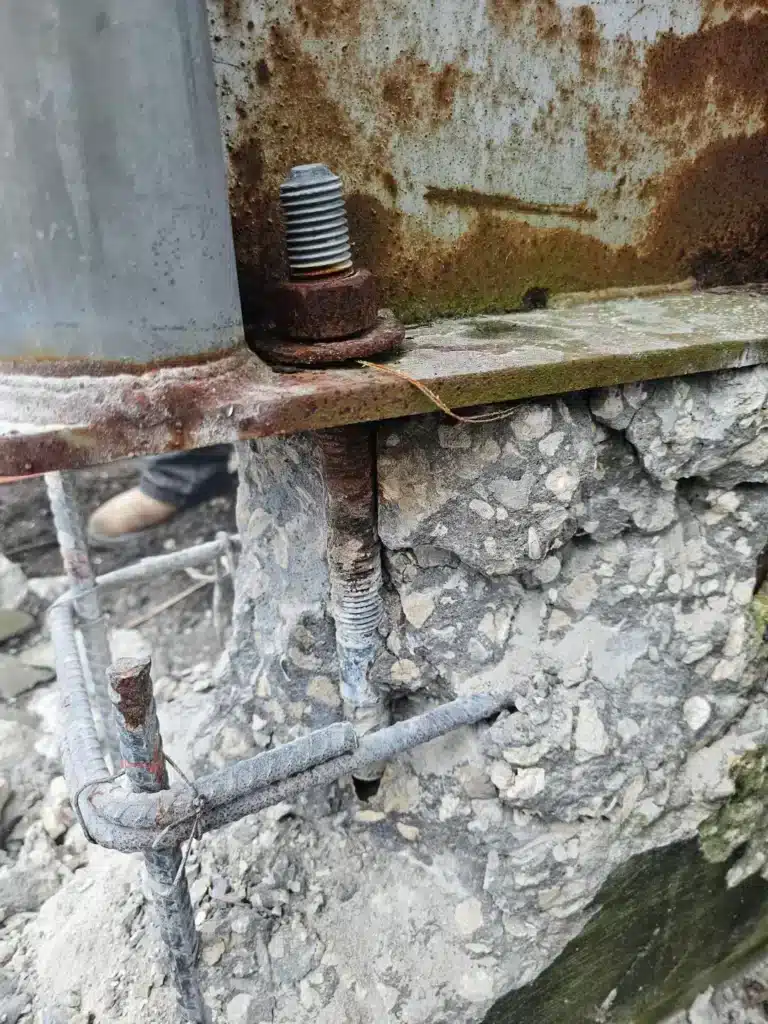
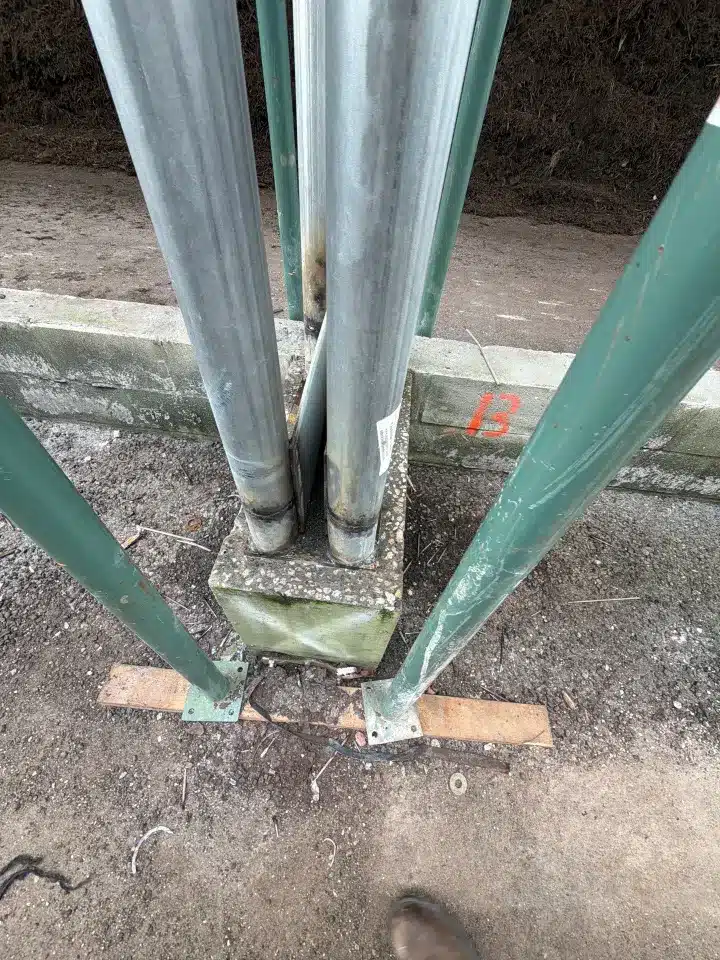
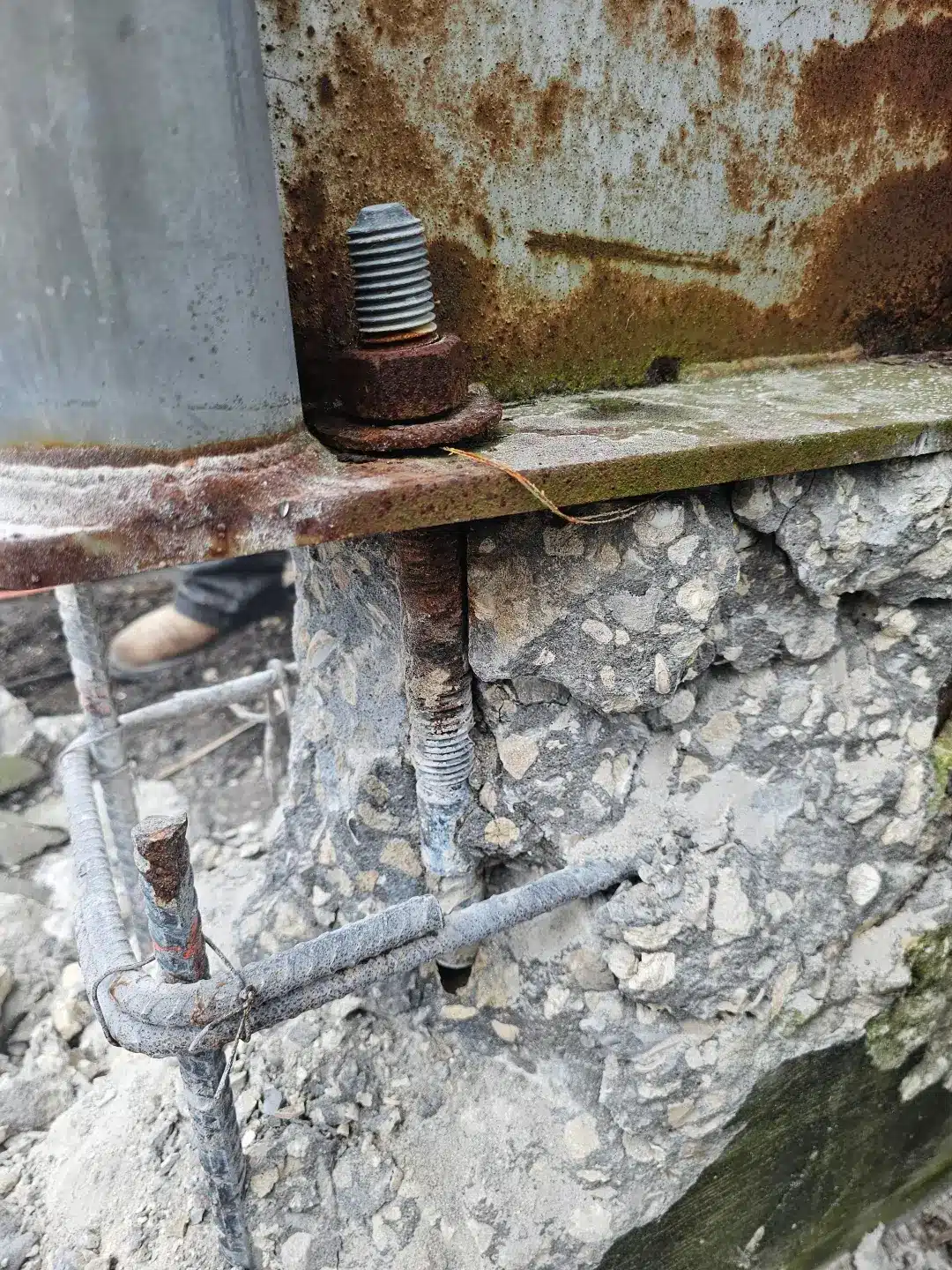
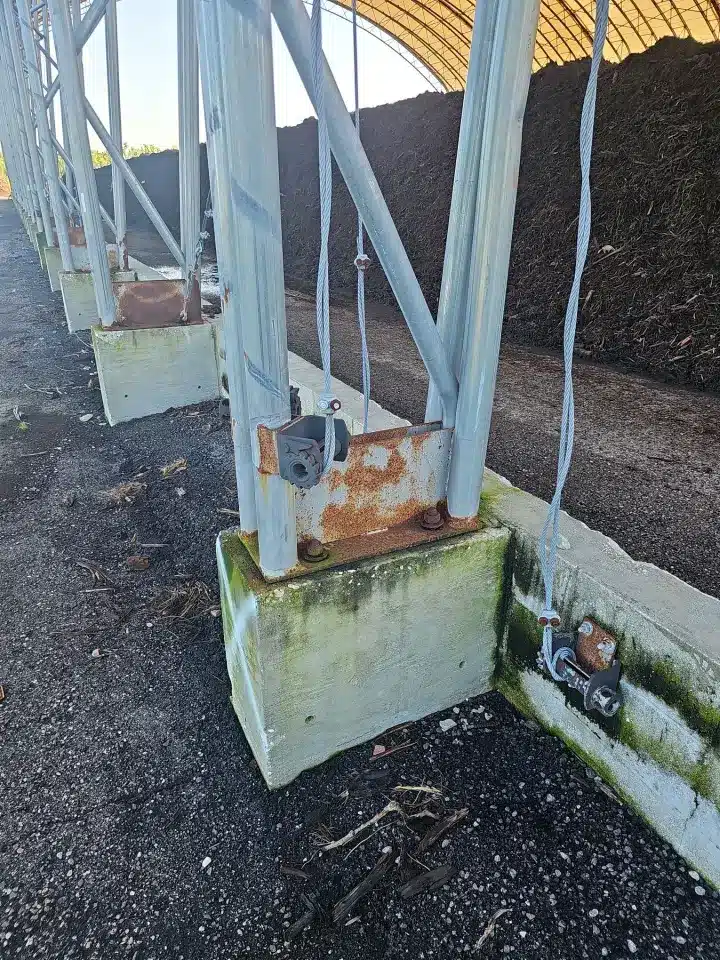
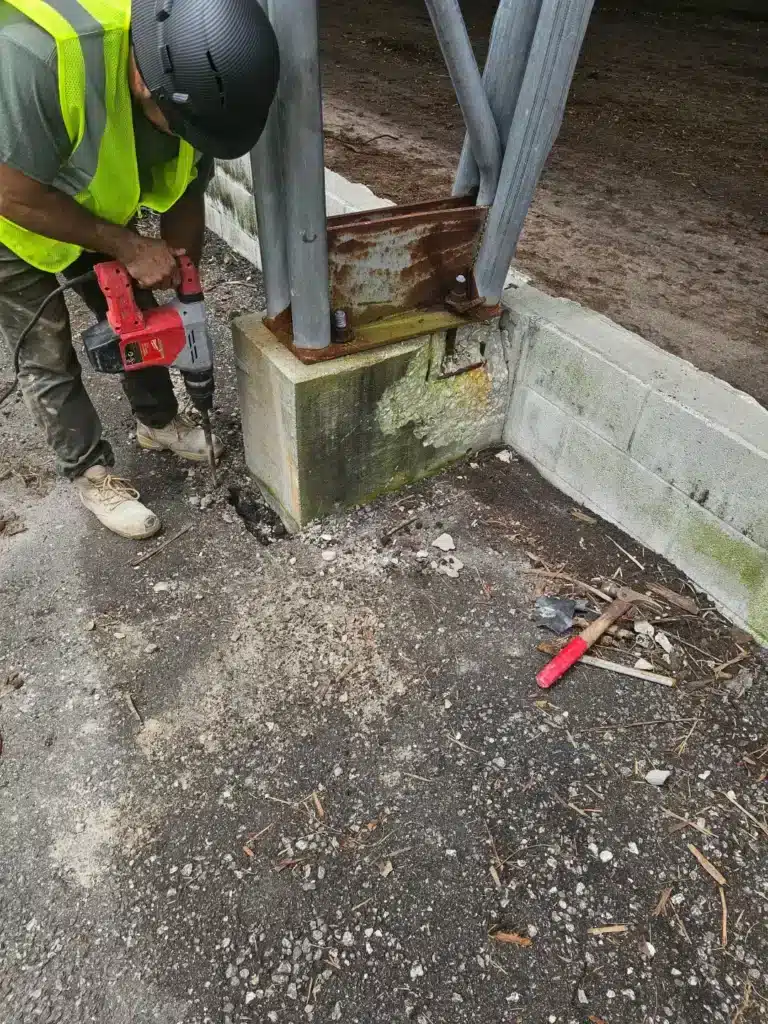
Years of hurricane exposure and neglected maintenance had taken a serious toll. The fabric coverings were torn. The structural steel was heavily corroded. And the concrete pedestals, the connection points between the steel columns and the foundation, had deteriorated to the point of failure. Bases were cracked and crumbling. Steel was rusted through. Standing inside, you could see the damage was structural, not cosmetic.
The client had been searching for a qualified contractor since 2021. Not passively. They were making calls, requesting bids, reaching out to firms. Every contractor they contacted either declined the job or could not propose a solution that was financially viable.
The work itself was not extraordinarily complex. What it required was the engineering knowledge to assess the damage accurately, develop a code-compliant repair plan, and execute it at a cost the client could absorb. That combination is uncommon. It’s what we do.
We were brought in through an engineering referral. We conducted a full site assessment, documented the scope of damage, and developed an intervention plan.
The objective was clear: restore every pedestal to full structural integrity while keeping the project economically viable. That is value engineering. Not overbuilding. Not cutting corners.
Finding the most efficient path to a code-compliant, long-lasting repair.
We started with a paid site assessment. On-site, we mapped the full extent of the damage and determined the repair would need to proceed one structural axis at a time. You cannot compromise the stability of a 50-foot structure by opening up every section simultaneously.
From there, we developed a complete intervention plan with detailed structural drawings.
Before any demolition could begin, the affected sections had to be properly supported. We installed temporary shoring and secured the structure with chain tie-downs to prevent movement from wind loads during the repair.
At this scale, there is no room for improvisation.
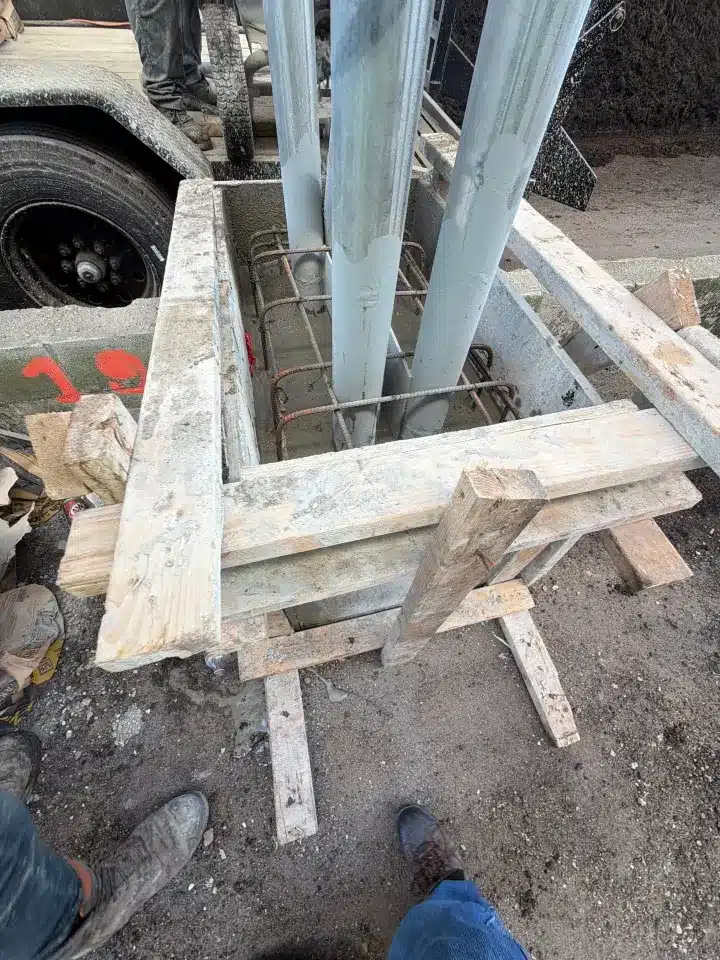
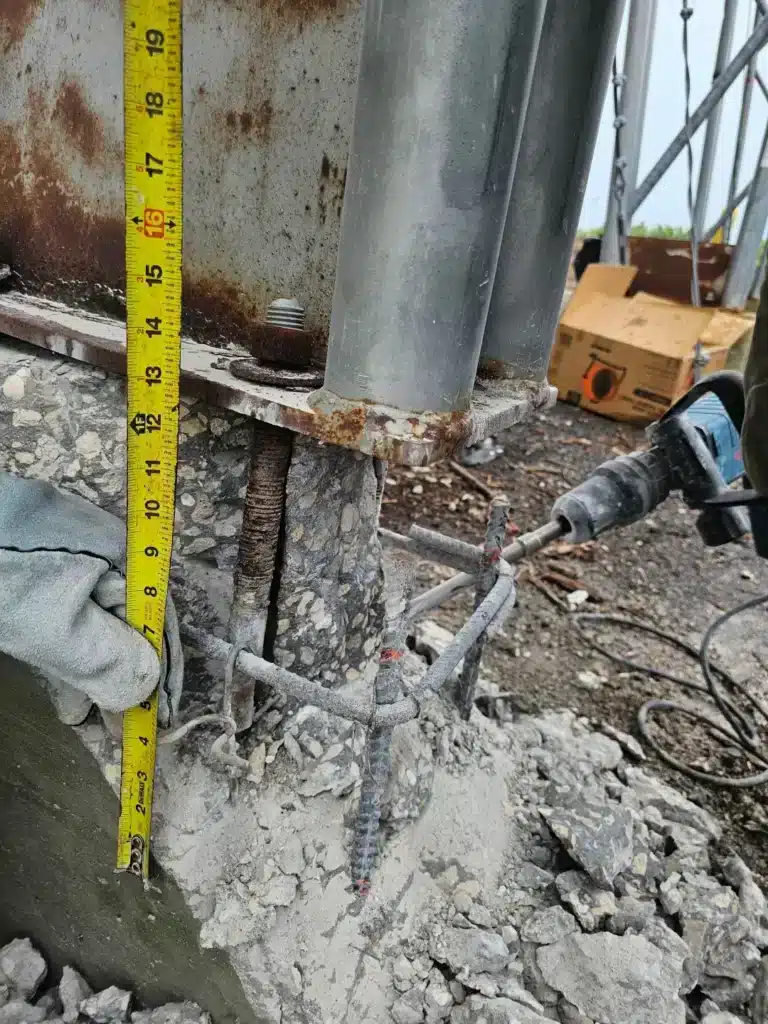
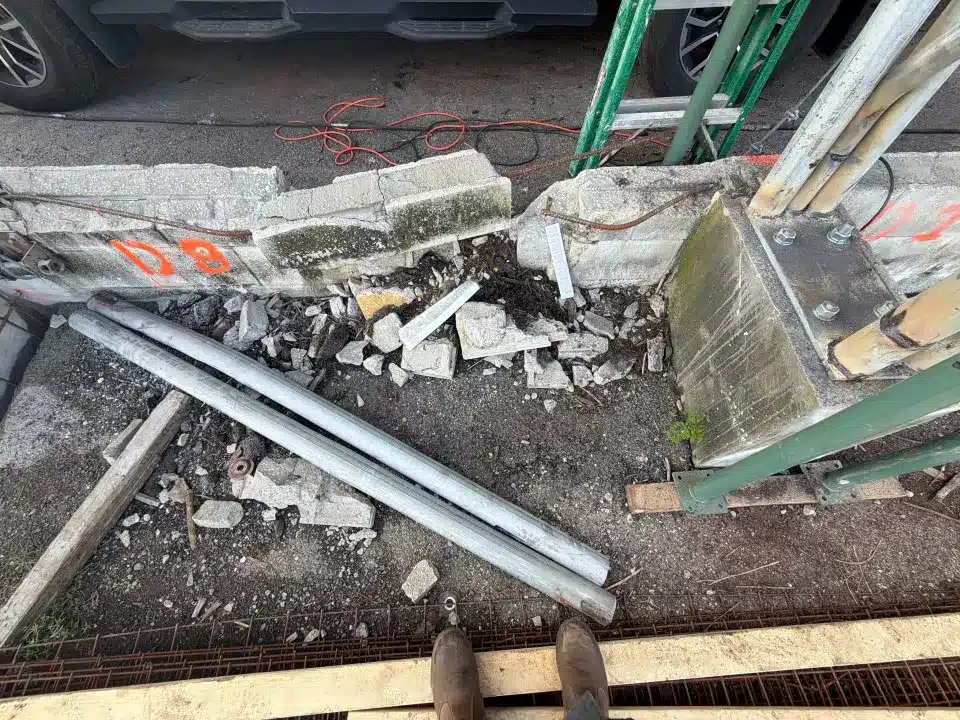
We demolished the existing concrete pedestals with care, preserving original rebar where it was still viable. During demolition, we discovered the internal steel pipes were corroded well beyond salvageable condition.
Several were bent. This was not going to be a surface-level repair. Full replacement was necessary.
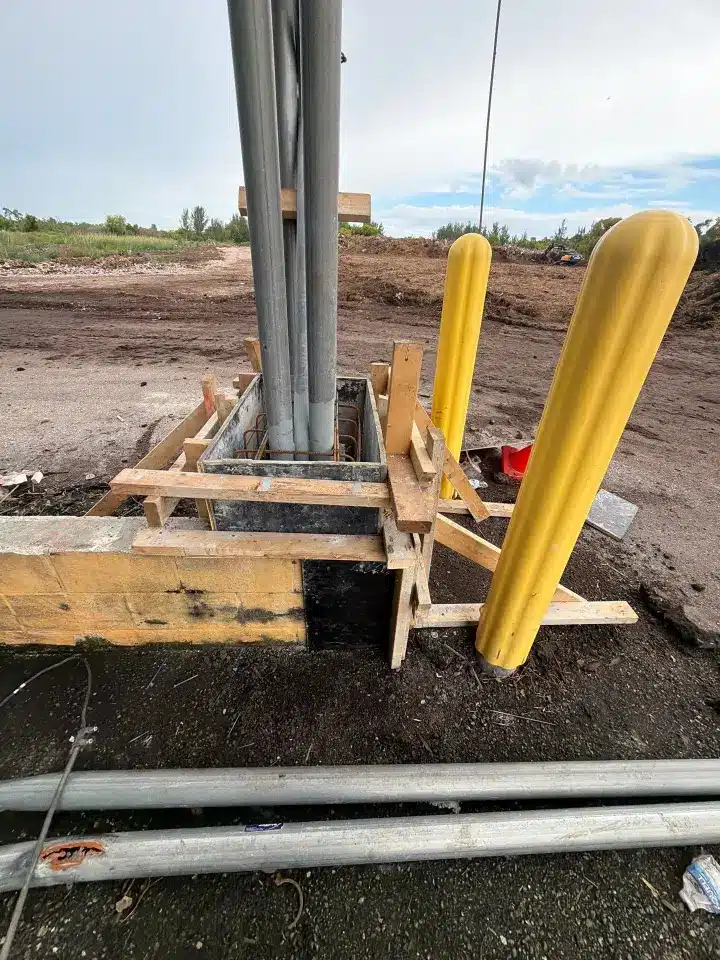
Cut points were marked on the damaged pipe. Compromised sections were removed and replaced with new steel pipe, new steel base plates, and new flanges.
Every connection was rebuilt to meet or exceed the original specification.
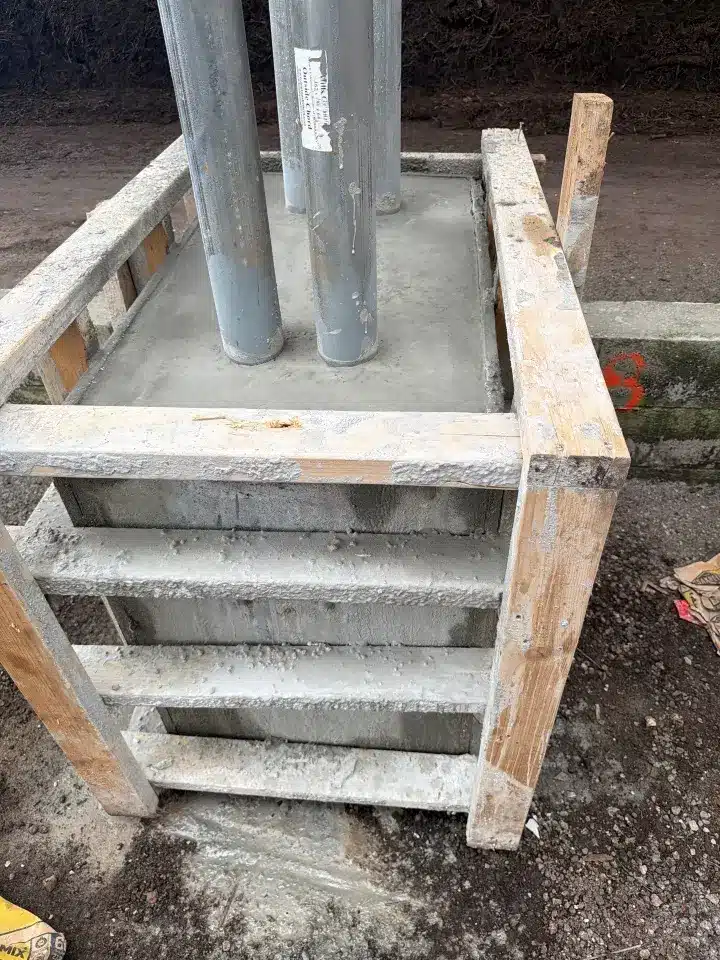
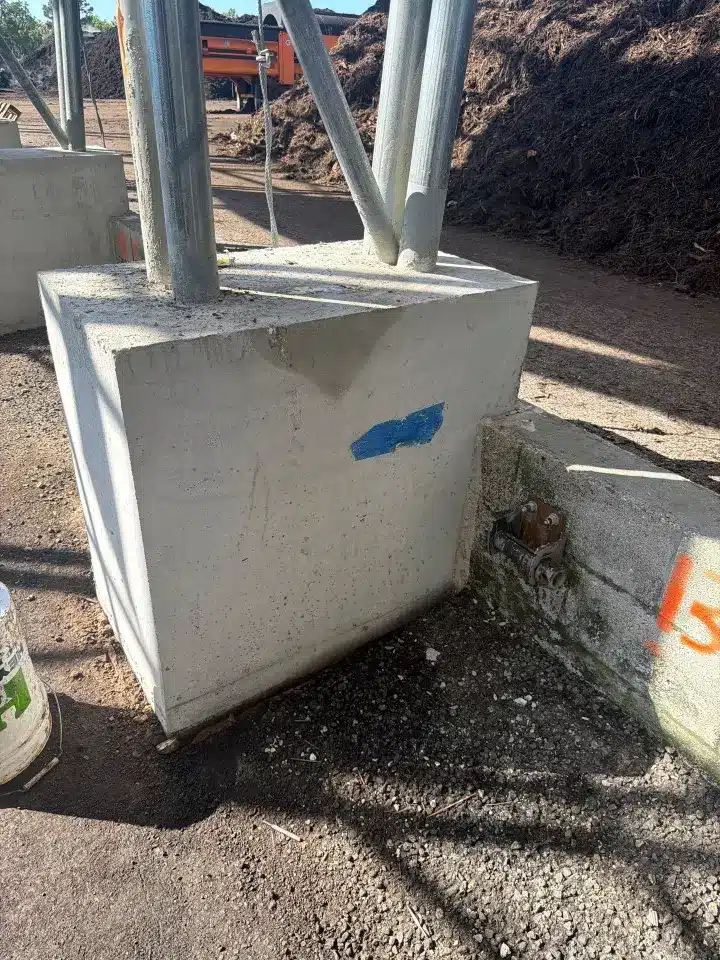
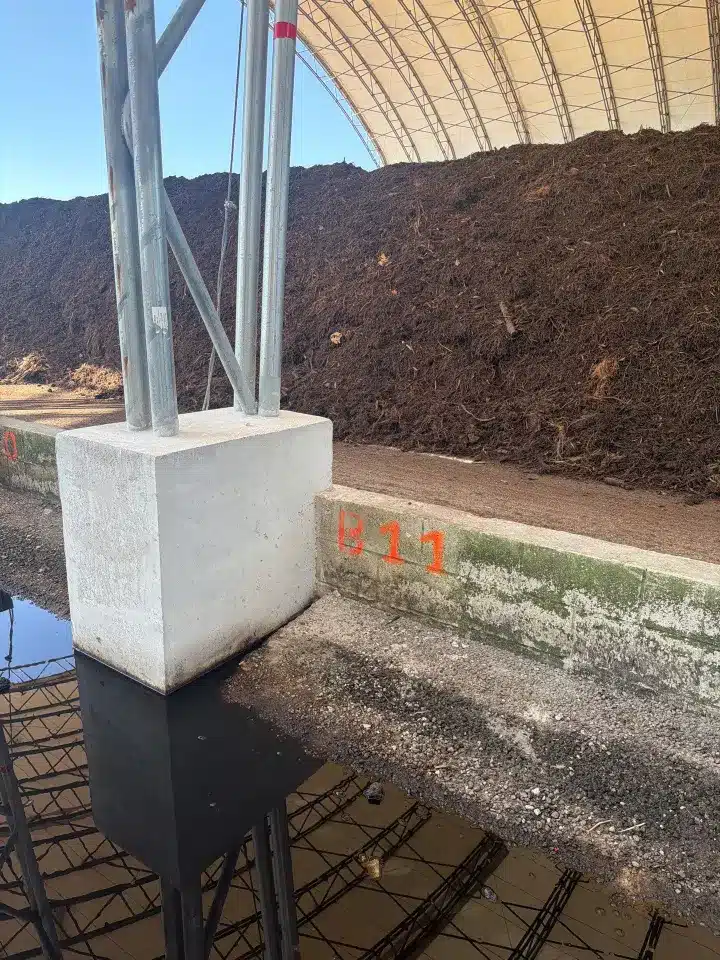
We used phenolic plywood for the concrete formwork. Standard plywood leaves a rough wood-grain imprint on the finished surface. Phenolic plywood has a smooth resin coating that produces a clean, flat finish.
It is a detail that separates professional concrete work from rushed work.
4,000 PSI concrete was poured on site. Self-leveling compound was applied to achieve a perfectly flat bearing surface.
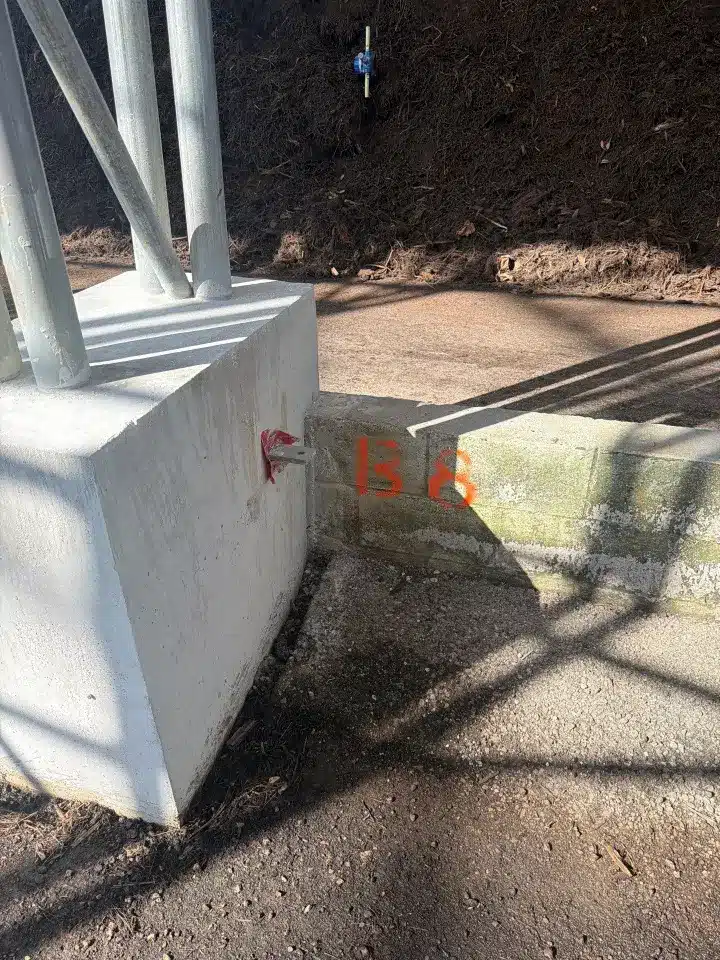
Each finished pedestal received a galvanized protective coating carrying a 30-year warranty against corrosion.
For the anchor system, we specified the Hilti KWIK Bolt TZ2 (KBTC2), a certified wedge anchor. One inch in diameter. $61 per unit. Each bolt ships with full technical documentation, including installation torque specifications, required equipment, and a manufacturer’s certificate of compliance.
These are engineered fasteners for structural applications, not general-purpose hardware.
The project encompasses 116 pedestals across the facility. Work proceeds one axis at a time to maintain the structural stability of the building throughout the repair.
As of early 2026, approximately half the pedestals have been completed. The client is allocating budget for the remainder, and we anticipate resuming work in April.
The differentiator was engineering, not labor. The physical repair work was well within standard construction capability. What no previous contractor could provide was the engineering to scope the problem, design a viable solution, and price it realistically. That is what kept this building broken for four years.
Value engineering made the project possible. We developed a repair approach that met full Florida building code requirements while staying within the client’s budget. That is not something you get from a general contractor making field decisions without engineering support.
Structural maintenance creates ongoing relationships. This is not a single transaction. The client requires continued maintenance across their facility, and we have now established ourselves as the team that can deliver it. That is the kind of work that builds a business.
The opportunity extends nationally. Big Tops manufactures these structures across the country. Every facility with deferred maintenance is a potential client. This case study can be shared directly with property managers at similar sites as documented proof of capability.
We specialize in the projects other contractors walk away from. If you have a commercial or industrial structure that requires engineering-driven structural repair, we want to hear about it.