
Site Preparation
We excavate to the required elevation and compact the subgrade soil to prevent future settlement.
From Blueprint to Reality with Excellence
We pour foundations, slabs, and structural concrete engineered for Florida's specific soil and weather conditions. We prioritize mix design, proper reinforcement, and correct curing to ensure durability.
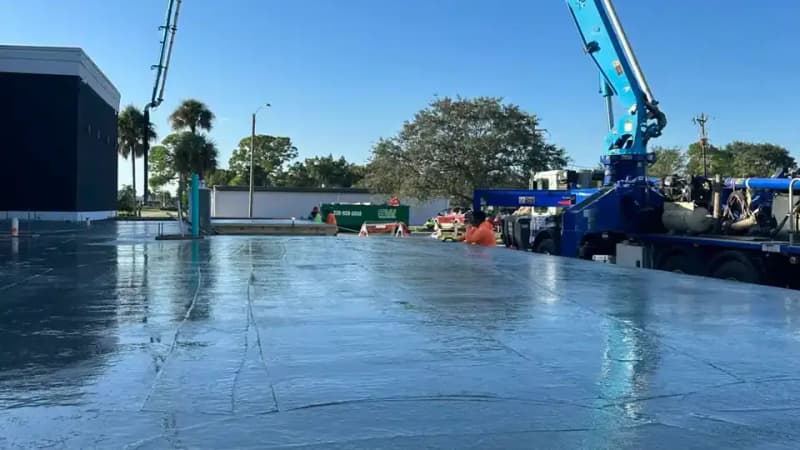
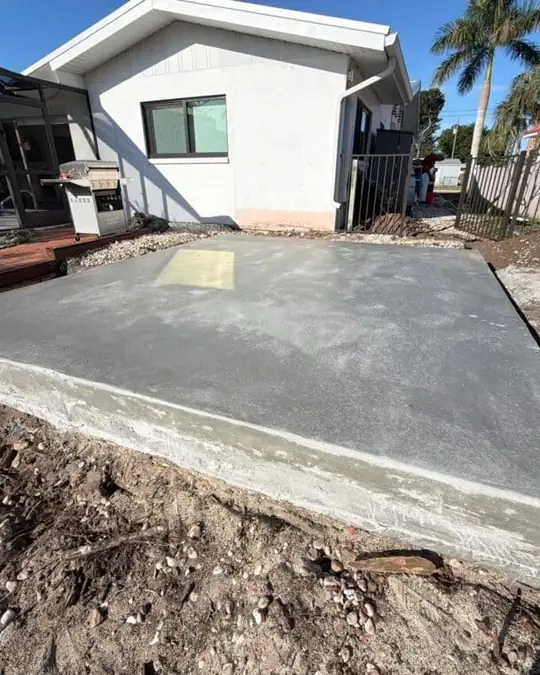
Concrete in Southwest Florida faces specific environmental stressors that lead to premature failure. Without proper specification and placement, structural integrity is compromised.
| Application | PSI Rating | Reinforcement | Use Case |
|---|---|---|---|
| Monolithic Slab | 3,000+ PSI | Fiber Mesh / Wire | Residential home foundations. |
| Structural Tie-Beam | 4,000+ PSI | #5 Rebar (Grade 60) | Load-bearing masonry support. |
| Marine Concrete | 5,000+ PSI | Epoxy / Galvanized Rebar | Seawall caps, docks (corrosion resistant). |
| Driveways/Flatwork | 3,000 PSI | Fiber Mesh | Vehicular access and patios. |
A Proven Process
Our step-by-step process is designed to remove the guesswork, reduce stress, and maximize returns - giving you peace of mind at every stage.
We excavate to the required elevation and compact the subgrade soil to prevent future settlement.
We install forms to precise dimensions and lay vapor barriers to prevent ground moisture from wicking into the slab.
We install steel rebar on "chairs" to ensure it sits in the center of the slab, providing maximum strength and proper coverage.
We place the concrete and use mechanical vibrators to remove air pockets, called honeycombing, and ensure consolidation around the steel.
We screed, float, and trowel the surface to the specified finish, cutting control joints to manage shrinkage.
We apply curing compounds or keep the slab wet to slow down evaporation, ensuring the concrete reaches its full design strength.
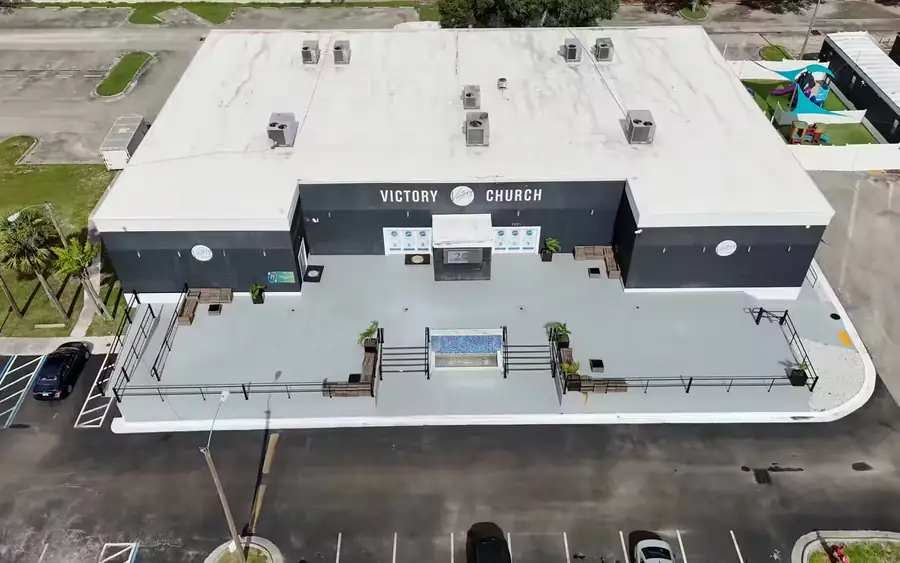 Victory Church Concrete PourAfter every Sunday service, the congregation had nowhere to go. No outdoor space. No area for events. The facade was plain, the front steps were cracking, and people were tripping walking in and out. The church needed a facelift and a gathering area - something that could handle Sunday crowds, farmers markets, canopies, chairs, grills, foot traffic, weather.Read More
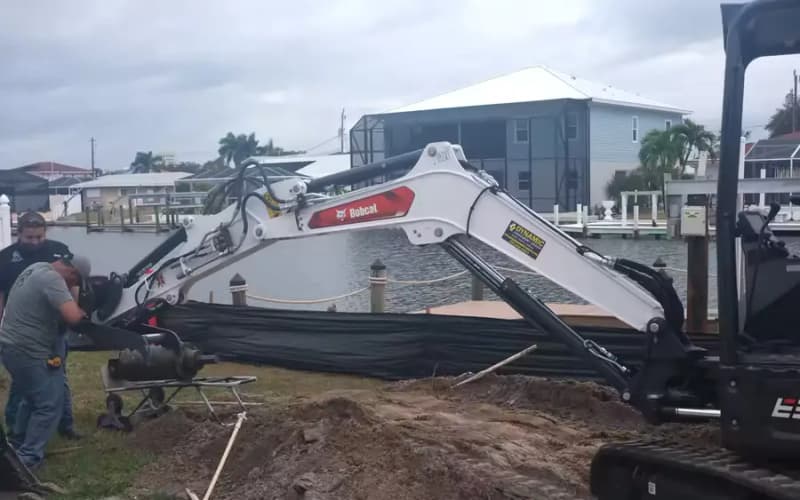 Bxpose Pool ConstructionWe were brought in for one thing: make sure this pool stays where you put it. We designed a helical pile foundation; eight steel anchors driven into stable soil below the water table, locking the shell down. A typical pool in South Florida has zero piles. This one has eight. That is the difference.Read More
 SynagroYears of hurricane exposure and neglected maintenance had taken a serious toll. The fabric coverings were torn. The structural steel was heavily corroded. And the concrete pedestals, the connection points between the steel columns and the foundation, had deteriorated to the point of failure. Bases were cracked and crumbling. Steel was rusted through. Standing inside, you could see the damage was structural, not cosmetic.Read MoreBxpose Pool ConstructionWe were brought in for one thing: make sure this pool stays where you put it. We designed a helical pile foundation; eight steel anchors driven into stable soil below the water table, locking the shell down. A typical pool in South Florida has zero piles. This one has eight. That is the difference.Read More
 Seabreeze Residence RestorationFrom a flooded first story and shattered structural columns to a flawless finish. See why simply patching hurricane damage is a dangerous gamble, and look inside the complete, start-to-finish engineered restoration of a South Florida beachfront home.Read MoreVictory Church Concrete PourAfter every Sunday service, the congregation had nowhere to go. No outdoor space. No area for events. The facade was plain, the front steps were cracking, and people were tripping walking in and out. The church needed a facelift and a gathering area - something that could handle Sunday crowds, farmers markets, canopies, chairs, grills, foot traffic, weather.Read MoreBxpose Pool ConstructionWe were brought in for one thing: make sure this pool stays where you put it. We designed a helical pile foundation; eight steel anchors driven into stable soil below the water table, locking the shell down. A typical pool in South Florida has zero piles. This one has eight. That is the difference.Read More
 Emergency Floor RestorationCollapsing floors, live electrical wires on damp earth, and 80-year-old rotting lumber hiding beneath a "new" floor. Step inside the Kelly Piper Residence to see the terrifying reality of cut-rate contractor work, and the engineered rebuild that actually saved the property.Read MoreSeabreeze Residence RestorationFrom a flooded first story and shattered structural columns to a flawless finish. See why simply patching hurricane damage is a dangerous gamble, and look inside the complete, start-to-finish engineered restoration of a South Florida beachfront home.Read MoreSynagroYears of hurricane exposure and neglected maintenance had taken a serious toll. The fabric coverings were torn. The structural steel was heavily corroded. And the concrete pedestals, the connection points between the steel columns and the foundation, had deteriorated to the point of failure. Bases were cracked and crumbling. Steel was rusted through. Standing inside, you could see the damage was structural, not cosmetic.Read More
Why it holds up
Mix design, cover, vibration, and permitting stay tied to the pour.
We adjust the water-to-cement ratio and use admixtures to suit the specific weather conditions on the day of the pour.
We ensure rebar is never exposed to the earth or the air, maintaining the specific clearance required by code to prevent rust.
We mechanically vibrate structural pours to eliminate voids and "honeycombs" that weaken the structure.
We handle the building permits and form board surveys required before pouring.
What people say
Take Off Construction Management serves Cape Coral, Lehigh Acres, Miami, and surrounding South Florida communities.
The service footprint covers the published locations across Lee, Charlotte, Collier, Sarasota, Miami-Dade, and Broward Counties.
View All LocationsConcrete Works
Concrete answers on slabs, foundations, spalling, permits, coastal durability, and structural repair planning across South Florida.
We provide structural and specialty concrete services including foundations, slabs, columns, footings, structural repairs, and reinforced concrete installations. Our projects range from residential structural repairs to commercial-grade structural concrete systems designed to meet Florida Building Code requirements.
Cracks or surface damage are often symptoms of deeper structural issues such as soil movement, water intrusion, or corroded reinforcement steel. Before quoting repairs, we evaluate the underlying cause to ensure the solution permanently stabilizes the structure rather than just patching the visible damage.
Florida's sandy soil, high water table, heat cycles, and occasional storm-related ground movement can cause foundations and slabs to shift. Other common causes include improper drainage, soil settlement, or corrosion of internal steel reinforcement.
Concrete spalling occurs when moisture penetrates the concrete and causes the internal rebar to rust and expand, which cracks and breaks the surrounding concrete. Proper repair involves removing damaged concrete, treating or replacing corroded steel, and pouring high-strength structural concrete designed for coastal environments.
We use engineered concrete mixes tailored to the application. For structural columns and repairs, high-PSI concrete with corrosion inhibitors is often required. In areas with voids or limited access, we may use flowable fill to ensure full structural support.
In many cases, yes. If the structural integrity of the surrounding system is intact, we can repair concrete using reinforcement techniques, epoxy injections, or structural patching systems. However, severely compromised elements may require partial or full replacement.
Most structural concrete work, such as foundations, structural columns, load-bearing walls, or significant slab repairs, requires permits and inspections. Takeoff CM manages the entire permitting process to ensure compliance with Florida building regulations.
Timelines depend on the scope of work. Small repairs may take a few days, while structural foundations or reinforced slab installations may take several weeks including engineering review, permitting, installation, and curing time.
We use reinforced steel systems, marine-grade materials, and protective additives to resist corrosion and salt exposure. Proper reinforcement placement, curing procedures, and drainage planning also extend the lifespan of the structure.
Yes. When performed correctly, structural concrete repairs can restore or even extend the service life of foundations, columns, and load-bearing elements. Our goal is to address the root structural issue and provide long-term stability.